Your Second Brain

Your Second Brain, built for you.

Save anything you read, watch, or hear. REPS organizes it, connects it, and remembers it for you.

Get early access Invite-only. One email when your invite is ready.
The short answer

A second brain is an external home for everything you read, watch, and hear, so your memory does not have to hold it all. Most second brain apps stop at storage. REPS goes further: everything you save becomes a living, visual knowledge graph, and REPS brings it back as a quick daily game so it actually sticks. A second brain that remembers for you, not one that just files things away.

How it works

From saved and forgotten to saved and known.

A second brain only works if you actually remember what is inside it. REPS does the organizing and the remembering for you, in three steps.

1

Save anything you read, watch, or hear.

An article, a YouTube video, a podcast, a page from a book. Share it to REPS in two taps and get on with your day. This is the bookmark that actually keeps what is inside.

2

REPS maps it into your Second Brain.

REPS reads each thing you save, files it, and connects it to the related things you already know. No folders to build, no tags to write, no links to draw by hand. You save; REPS does the rest.

3

You explore it, and it sticks.

Each day, a handful of quick rounds bring your saved knowledge back. It feels like play, not homework, and every round makes the things you cared about a little harder to forget.

A living map of what you know

Watch your knowledge become a place.

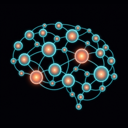
Every article, video, and idea you save becomes a star in your Second Brain, and REPS draws the lines between the ones that connect. It is not a folder tree you maintain. It is a living map that grows on its own as you save, so the more you keep, the more you can see how it all fits together.

A live look at a Second Brain taking shape in REPS.

Where the alternatives stop

The honest rundown of second brain apps.

I use these too. Here is where each one genuinely wins, and the catch for anyone who mostly wants to remember what they save without becoming their own librarian.
Our pick, done for you

REPS: a second brain that remembers for you.

We built REPS for the person searching this page: someone who wants a second brain, but not a second job maintaining it. You save an article, a video, or a podcast, and REPS organizes it, connects it, and remembers it for you, mapping everything into a living, visual knowledge graph and bringing it back on a spaced schedule as a quick daily game. You are not the librarian, and you are not re-reading to make it stick.

To be fair to the rest of this list: REPS is not an open-ended workspace you can shape into anything. If you want total control over structure, databases, and plugins, the tools below are built for that. If you want to save anything and simply remember it, that is REPS.
The workspace

Notion and Obsidian: powerful, if you are the librarian.

Where they win

Notion and Obsidian are extraordinary if you love building your own system. Notion is the flexible workspace where a whole team can run docs, databases, and wikis in one place. Obsidian is the local-first favorite for people who want their notes as plain files and enjoy wiring up their own graph of links. For power users who want total control, little else comes close.

The honest catch

You are the librarian. You file everything, write the tags, and draw the links by hand, and if you stop maintaining it, the whole thing quietly decays. And crucially, they store; they do not make you remember. There is no built-in recall, so a note is only as useful as the times you happen to reopen it. That is the exact gap REPS fills.

Read the full Obsidian comparison
The chatbot over your notes

AI note tools: instant answers, if asking is enough.

Where they win

The newer AI note and RAG tools are genuinely useful for finding things. You dump in your notes and ask questions, and the AI answers from what you saved. If your problem is "I know I read this somewhere and I cannot find it," a chatbot over your notes is a real improvement over plain search.

The honest catch

A chatbot answers when you ask, but it does not build your memory. The knowledge still lives in the app, not in your head. REPS is the opposite bet: instead of answering for you, it turns what you save into a game that makes you remember it, so over time you actually know it.

Good questions

Second brain apps, answered plainly.

What is a second brain app?

A second brain app is a place to capture everything you read, watch, and hear so your memory does not have to hold it all. The idea is an external system for your knowledge. Most second brain apps stop at storage: they file your notes neatly, but they do not make you remember what is inside. REPS is a second brain that remembers for you. It turns everything you save into a living, visual knowledge graph and brings it back as a quick daily game so it actually sticks.

What is an AI second brain?

An AI second brain uses artificial intelligence to organize and work with what you save, instead of leaving all the filing and linking to you. In most AI note tools that means a chatbot you can ask questions about your notes. REPS uses AI differently: it reads each thing you save, connects it into your knowledge graph automatically, and writes the recall questions that bring it back on a spaced schedule. The AI does the organizing and the remembering for you, so you are not the librarian and you are not re-reading to make it stick.

Do I have to organize my second brain myself?

Not in REPS. In Notion or Obsidian you are the librarian: you build the folders, write the tags, and draw the links by hand, and if you stop maintaining it the whole thing decays. REPS organizes it for you. You save an article, a video, or a podcast in two taps and REPS files it, connects it to related things you already know, and maps it into your Second Brain automatically. You save; REPS does the rest.

How is this different from Notion or Obsidian?

Notion and Obsidian are powerful, endlessly customizable workspaces, and if you love building your own system they are hard to beat. But they store; they do not make you remember. There is no built-in recall, so the notes you file are only as useful as the times you happen to reopen them. REPS is built around the opposite promise: it organizes what you save for you, and then it brings it back as a quick daily game so the knowledge stays in your head, not just on a page you will not revisit.

Mike McGraw, founder of REPS
About the author
Mike McGraw
Founder, REPS

I started building REPS after realizing I could not remember most of what I read. I use every app on this page myself, and I write these the way I wish someone had written them for me.

Keep exploring

Related reading.

Build a second brain that remembers.

Save anything. REPS organizes it, connects it, and turns it into quick games that make it stick. Join the waitlist and we will email your invite.

Invite-only early access. One email when your invite is ready. No spam.

You are a Founding Member, one of the first 100. New features reach you first, and we will email your invite when it is ready.